Sunday, November 13, 2011

No Fo Pah

It all seems to real to be possible.

Every day families turn on the news and hear horror stories of deranged individuals committing acts of sexual misconduct on people younger than they are. Sexual misconducts are unholy taboos in our country today. Even if a person were to be charged with sexual assault and found not guilty, the black cloud that would hang over that person's reputation would engulf their reputation in scorn for the rest of their days. 

People do not want to hear these horror stories, so they turn to the world of sports to provide them with a sense of escapism. The fierce competition, captivating plays, and gratuitous strategy surrounding these games offer an alternative to the harsh realities that exist in our everyday lives.

And then this happened.

Penn State University began to drown in a sea of sexual assault accusations that were proven to be true. Jerry Sandusky quickly became one of the most hated men in America over the course of a few hours. And Penn State's legendary head coach who lead the program since 1966, was fired for not reporting what had happened.

The knee jerk reactions to the Penn State scandal were understandable. A seemingly stable football community  was torn appart at the seams by alligations that had been strict taboo in this country. Nobody knew how these acts took place for the better part of a decade. But everyone was shocked and furious.

Sandusky became a demon, Joe Paterno became a scapegoat, and the higher UPS at Penn State were questioned from every angle as to how a coach sexually assaulting young men had gone on unreported.

And somehow Joe Paterno became a victim.

The omnipresent icon of Nitnay Lions football had the support of the appalled community after he had been fired. Students took to the streets drunk and furious that their father of football had been divorced by their school. Streetposts were knocked down, a television news van was flipped over, and distraught students cried desperately for the return of their beloved Jo Pa.


And why wouldn't they cry?


Paterno had won more college football games in his career than any other head coach in history. Paterno guided his team to three Big Ten championships and two national championships. But most importantly, Paterno had shapped the minds of students who did not turn pro to better their lives after football. But noweverything Paterno accomplished in his supreme court justice long run at Penn State had been covered by an inescapable black cloud bigger than any game he ever coached in.

Joe Paterno may not have been the one to commit the deeds, but he did not report his findings to the police. Paterno was not and should have been punished by law for his failure, but the school had to fire him. As a representative to Penn State, Paterno had an obligation report a crime that occurred repeatedly on his watch. Why he did not report see despicable acts is unknown, the consequences for not doing so were made abundantly clear.


With the fire extinguished, the riots over, and Penn State's loss to Nebraska on Saturday, the community now must pick up the pieces. This scandal will not leave the memories of the victims, and will take a while for the rest of the  country to forgive those who let this happen. It is hard to imagine that Penn State will return to its prior glory after these events. Paterno's successor will have to take up the daunting task of explaining to parents why their child should attend a school where  children were taken advantage of? The answer to that all important question is another question: would you have stopped Jeff Sandunsky if you knew what was going on?



Thursday, November 3, 2011

The Answer to an Age Old Question

A group of seven students at a local university are seated at various locations across a dimly lit dorm room with the sights and sounds of Monday Night Football filling the room. The four football fans in the room are all fixated on the screen; hyper focused on the offensive players shifting in motion while the defensive players attempt to adjust their coverage. Soon after the adjustments, the ball is snapped, a pass is thrown, and the offensive team goes ten yards for a first down.

The play gets a rise out of four students in the room and the conversation quickly shifts to certain plays that are superior in certain situations. The other three viewers see the same play unfold, but they elect not to join in the conversation the rest of the room is having. As the discussion carries on, one of the three students asks a question that catches everyone in the room off guard.

"How can you guys talk about football so much?"

The question is dismissed at first blush by the viewing audience in the room, but that one question raises several others; not only about football, but about all sports in general.

What is it about sports that is so compelling that cause people to tun in time and time again? How come people can talk about sports for hours on end? What is it about these games that cause everyday working people to riot in the streets, flip cars, and set objects on fire? And perhaps the most important question of them all: Why do people even care about sports? There are several different aspects of life that can receive the undivided attention of people, but why do so many people pay so much attention to sports?

The answers to these questions reside within several factors that the world of sports provides to its viewing audience.

The first factor in why people care so much about sports is because of how many people can relate to sports.

Watching sports is one of the few aspects of global culture that does not discriminate against race, sex, or age. Whenever somebody enters a stadium, there appears a melting pot of fathers, mothers, grandparents, daughters, sons, in laws, friends, and couples of all shapes and sizes can be seen wearing their team's apparel. Whether it be batter in the bottom of the ninth, a basketball player taking the last shot, a Hail Mary pass in the NFL, or a shootout on the ice, a team's fans all share the same hope that their player will come through. And the most frequent type of discrimination that occurs in sport happens when two different people are fans of different teams. Sure insults go back and forth between fans, but solace can be taken in the fact that these jeers of disapproval are done to put down a rival team as opposed to directly attacking the person his or herself.

On a similar note, some people choose to enter the world of sports because their families and friends are so passionate about it. There are countless images of families at sporting events and seeing a young boy or girl holding up a "it's my first game" sign. These children gain an interest in the sport because they grow up with sports being around them all of the time.

But the bonds of sports fans go beyond individuals rooting for their favorite teams. Everybody likes to hear stories of people who overcome adversity; and professional sports are filled with players who come from broken homes and bad circumstances only to be saved by the sport that they play. You may recall the film The Blind Side with Sandra Bullock regarding offensive tackle Michael Oher. The story of a young man with a great deal of strength who tries to escape the rough neighborhood he grew up in. In fact, every aspect of Oher's story is true and he is currently playing for the Baltimore Ravens. Or the story of Invictus which the South African Rugby team's run to the World cup of Rugby brought an entire nation together. People love to see individuals overcome all odds, and the world of sports gives fans a areal view of the lives these athletes lead.

But it is not just the lives of the athletes that get people to watch sports, it is also the dazzling plays that athletes make that captivate fans across the sport. Whether it be Prince Fielder of the Milwaukee Brewers hitting moonshot home runs, LeBron James bulldozing defenders before throwing down slam dunks that get audiences all rilled up, Calvin Johnson making spectacular catches in the back corners of end zones, or Henrik Lundqvist standing on his head to make saves, there are so many athletic plays in sports that capture the imaginations of sports viewers. We are all captivated by things that we cannot do ourselves, and these athletes making great plays are something that everyone can be impressed by.

And when these athletes make great plays, there are individuals who take these great moments and generate them into statistics in which everyone can keep track of. Keeping track of sports statistics is the water cooler effect of sports in action. How common is it to see a group of five or so employees at work talking about the number of touchdown passes Aaron Rogers has compared to Tom Brady's while in the office? We see it daily, regardless of what sport tickles your fancy. There are so many different kinds of statistics that you would need several computers to keep track of them all. Knowing statistics is a appeal to a person's thirst for knowledge in a field that they are compelled by for any of the reasons given above.

Despite this case there may be some individuals who will not be compelled to suddenly follow everything that is going on in the wide world of sports.

And that is perfectly fine.

There are so many different aspects of life that are just as beautiful and captivating as sports for different reasons. Some people may invest their time in following particular kinds of music. Others will spend their non working hours watching reruns of their favorite television shows. And others may want to collect nickles from every year that nickles have ever been made.

The possibilities are endless.

Sports have been so deeply ingrained in our culture that it becomes harder and harder not to pay attention to what is directly in front of us. So whether it be baseball, football, hockey, basketball, bull riding, swimming, gymnastics, soccer, track and field or another sport not on the list, the choice to watch is completely up to you. Just know that the world of sports is quite captivating if you look long enough.

Sunday, October 30, 2011

World Class

A well hit fly ball to left field that did not have enough to get out of the park. That is how it ended.

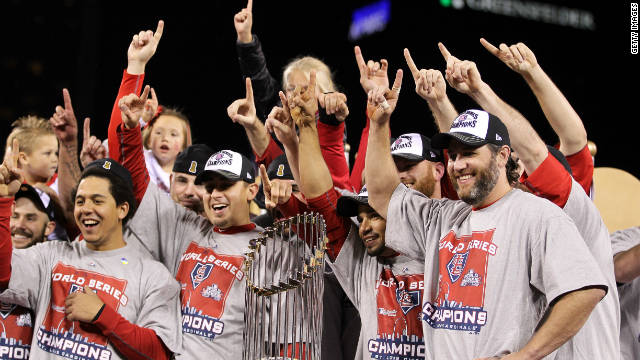
The most compelling World Series of the new millenium ended with a routine fly ball to left field and the Saint Louis Cardinals completed an impossible run. 

It was a shame that this fantastic World Series had to come to an end. This series portrayed some of the most compelling baseball in years. Four out of the seven games played were decided by two runs or less. Three of the seven games were come from behind wins. And two times the Saint Louis Cardinals down to their last strike in the same game only to come from behind and win arguably the greatest World Series game ever. We saw a team with an inferior offense on paper in Saint Louis out slug the Rangers in one game while the inferior pitching of the Rangers out performed the Cardinals in another. There was no predictability in the World Series which is why it was so compelling.


From Albert Pujols having arguably the greatest offensive performance in postseason history to a Darren Oliver, a seventeen year veteran winning a game, the 2011 World Series exemplified the most compelling aspects of sports. The drama that emitted from those games caught the attention of baseball fans that existed outside of Texas and Saint Louis. The competitiveness of this postseason roped in fans outside of the northeast teams markets into a series between two relatively small market franchises. The Texas Rangers and Saint Louis Cardinals brought back the passionate interest in baseball that had been missing for the latter half of this decade.


The unanswered questions about the two teams that participated in the world series would continue to linger, especially with Albert Pujols on the free agent market. But for now the memories and highlights of the 2011 World Series will certainly not be forgotten any time soon.

Sunday, October 23, 2011

Phat Albert

Baseball is a sport that thrives on its strategy and unpredictability. You never truly know what will happen on any given night when the two teams take the field, especially in the postseason. But for all of the speculation surrounding what the next game would produce and the large amount of anticipation surrounding what has been an extremely competitive World Series one thing was made abundantly clear: Game three of the 2011 World Series put Albert Pujols in the consolation of baseball stars that every player only dreams of reaching.


The numbers that Pujols has produced during game three were so good that the typical adjectives that describe a player's performance do not do it justice. The Saint Louis Cardinals first baseman is now the proud owner of this ludicrous line; five hits in six at bats, three home runs, six runs batted in, and a major league record fourteen total bases in a World Series game. Nobody has ever put up the kind of numbers that Pujols did all at the same time. Paul Molitor is the only other player with five hits in a World Series game. Only two other players, Hideki Matsui and Bobby Robinson, have ever driven in six runs during the fall classic. And Pujols is the only player ever to record fourteen total bases in a World Series game, ever. Again, all of these outrageous numbers were put up in a World Series game, one of the biggest stages in professional sports.

What kind of player has a game like this? Who has one of the best performances in the history of baseball during the championship games of one of the four major professional sports?

The short answer to these questions can be found by examining the names of the only two other men in the history of baseball to hit three home runs in a World Series game: Babe Ruth and Reggie Jackson. And right away, we know that Albert Pujols' performance ranks up there with the immortals of the game.


There are plenty of questions left unanswered after an all time great game from Albert Pujols. We do not yet know the answers to the short term questions, such as will the Saint Louis Cardinals win the World Series? Nor do we know where Albert Pujols will be playing baseball for the rest of his professional career. Or how many millions of dollars he will bring in when he becomes a free agent this upcoming winter. We do not even know where he will rank in baseball lore after he decides to hang up the cleats for good.

But what everybody does know after the 2011 champions has been decided is this: Nobody is going to forget  the game when Albert Pujols took a sledge hammer to the record books. The recording devices in our minds will not allow us to forsake the kind of performance that transformed Albert Pujols from a superstar to a legend of the game. And in case we forget, the highlights of that game will be burned onto programs like ESPN classic to make sure that the images of that night will not pass us by.

The story of Albert Pujols may not yet be completed, but game three of the 2011 World Series will certainly go down as one of the most compelling chapters.


Monday, October 17, 2011

Slight of Hand?

Since the dawn of time, rigorous forms of competition brought out the best and the worse in people. There are certain individuals who thrived in the limelight for the better, and there are those who melt under the intensity of the moment like an abandoned Snickers bar on the sidewalk. But after an intense 60 minutes of competition where coaches and athletes alike poured their hearts and souls into a sporting event, their viewing audience expected them to act as if they were in front of their in-laws as soon as the game had ended. So when coaches Jim Harbaugh of the San Francisco 49ers and Jim Schwartz of the Detroit Lions had some extra curricular activities after a fairly aggressive post game handshake by Harbaugh, there was some criticism of how both coaches acted when it all went down.
            The radio airwaves were filled with the predictable topics of “who was at fault for causing this to happen?”, “how can this kind of behavior be accepted?” and even to the more humorous “who would win in a fight?” But the general agreement among all talk show hosts and fans was that both coaches should not have acted the way that they did right after a very competitive game.
            How could it have been fair to expect the coaches who were expected to get their players emotionally ready for an upcoming game to not get emotionally invested themselves? It was unrealistic for fans and analysts alike to expect these men to cast their own feelings of frustration aside and shake hands like business partners without any time to compose themselves emotionally.
            Fortunately for Harbaugh and Schwartz, the NFL decided against punishing either of these men because there were not any punches thrown. But even after the incident came to a close, the double standard of coaches pumping emotion into their players one minute and becoming soulless shells at the end of a high powered competition remained.
            In an ideal world, Schwartz and Harbaugh would have been able to shake hands peacefully and walk into the tunnel with their emotions bottled up just like the other coaches. But Harbaugh and Schwartz are human. Their respective reactions were understandable in the heat of battle. If the NFL wanted to avoid these situations then they would have the coaches’ wait for two minutes before the handshake to let the emotions out for just a brief moment. Sports enabled us as fans to see real passion and feelings, and the NFL should not have tried to quell what makes sports so fun to watch.

Thursday, October 13, 2011

One Bear of a Task

One of the hardest things to do in the world of sports is to turn around a team that has seen more than it's fair share of past failures. Just ask the Red Sox. They had been plagued by the horrid outcomes from the 1949 season, to the impossible dream team coming up just short, to Bucky bleeping dent, and the ball going through Bill Buckner's legs. But the winds of change whistled through bean town in 2002-2003 when the Boston Red Sox introduced, at that time, the youngest general manager in baseball history. This new general manager took up the task of trying to end the then 84 year championship drought that hovered over the Red Sox. Then, two years and a great deal of front office moves later, the Boston Red Sox had finally won a World Series championship. Now, the general manager of that team, Theo Epstein, is taking his general managing talents to the franchise with the longest championship drought in all professional sports: The Chicago Cubs.


The Cubs 103 year championship drought aside, Theo Epstein is not simply going to ride into Chicago, chant expelliaramus, and turn a team that finished fifth in the National League Central in 2011 into a World Series contender in 2012. Unlike the 2002-2003 Red Sox, the Cubs do not have the vast majority of a winning nucleus already in place. The Cubs do have a big time talent in Starlin Castro, a productive veteran player in Aramis Ramirez, and a solid number three starter in Matt Garza. Still, taking chances on lower cost role players to surround that core, which is what Epstein did in his early days in Boston, is not the correct formula to use in bringing a championship to the north side of Chicago at this time. The Cubs need more big contributors around Castro Ramirez and Garza, and lately Epstein has not done well in providing his team with those kinds of players.


After striking gold twice in 2004 by bringing in Curt Schilling and Keith Foulke, Epstein has gone one for six in successful big named signings since the curse was broken. Among the busts that Epstein has inked to big time contracts include Edgar Renteria (4 years, $40 million), Julio Lugo (4 years, $36 million), J.D. Drew (5 years, $70 million), John Lackey (5 years, $82.5 million) and Carl Crawford (7 years, $142 million). Renteria and Lugo took turns being the worst shortstops in the majors during their respective stints in Boston. JD Drew had one good month in five years in a Red Sox uniform. Lackey and Crawford are already off to horrible starts in Boston.Yes Adrian Gonzalez did have a good statistical year overall with the Red Sox, but he faded down the stretch with the rest of his team. Despite his bad signings after 2004, Epstein seems up for the challenge of  helping a franchise that so desperately wants a World Series trophy.


Can Epstein help accomplish this daunting task? Sure he can. Epstein has a good track record for trading players and the Cubs have some players in their farm system they can move if necessary. In addition to being a good trader, Epstein also seems to have a good eye for managers. It was Epstein who first recommended Terry Francona for the Red Sox job in 2004 and that turned out well. If the Cubs do not bring Francona aboard, which is the more likely move, they can get another year out of Mike Quade and finally get around to making Ryne Sandberg their manager. The Chicago Cubs will not make an Arizona Diamondback like turnaround in 2012, but with Epstein as the general manager the Cubs could make the big turnaround their fans have been waiting for.  


Friday, October 7, 2011

I'm not ready for some football

This musical introduction has been around for most of our lives. It all begins with the drums playing at a fairly quick pace accompanied by images of fighter planes, aircraft carriers, and one Philadelphia Eagle running with the football. The song continues with a quick little guitar riff joined by more pictures of planes, wide receivers catching footballs, and cheerleaders motivating their teams. And then, there is a shot of one man in a cowboy attire. Hank Williams Junior is the man who boasts about his rowdy friends, subtly introduces the night's game, and yells one of the more popular quotes in the entire sport: "Are You Ready for Some Football!?" But now, after a twenty year run, "All My Rowdy Friends" will no longer be the introduction song for Monday Night Football on ESPN.


The song had been pulled by ESPN on October 3rd after Williams made some rather scathing comments regarding president Barack Obama. On top of the comments themselves, Williams' halfhearted apology not only suggested that he was not sorry for any of his comments, but rather that he seemed more angry that ESPN decided to stop using his song on air.


The reason that ESPN pulled the plug on Hank Williams and all of his rowdy friends was simple: ESPN had to protect its best interests moving forward and keeping someone as inflammatory as Williams would hurt the company name. And frankly it was the right decision to make. Williams "apologized" through his publicist and there is little doubt that not only is Williams not sorry for what he said, but also that there is nothing stopping him from saying something much worse. ESPN was right to draw the line at what Williams could and could not say because he may not have been an employee of the network, but they had such a close relationship that Williams' opinions made ESPN look bad.

Despite what has been said, this divorce did not ruin either ESPN or Williams' career. ESPN is still far and away the world wide leader in sports, and it's audience remains faithful to the network because there is no other serious competition. As for Williams, his musical career did not suffer to big of a blow with his song no longer being a staple for Monday Night Football. Williams had been voted entertainer of the year by the Country Music Association in 1987 and 1988, and was a superstar in the genre since the early 1980's. Did Williams' comments cost his some money for every time ESPN played the song? Sure, but Williams' had a target audience that would not be lost over some bad comments.


Who will replace Hank Williams Jr. as the introduction to Monday Night Football? That remains to be seen. However, there is no guarantee that any of Williams' replacements will be as rowdy or as ready for some football.